

Title: As “Recognition” Approaches Maturity, Why Does Physical AI Still Have So Much to Do?
Let’s begin with a simple experiment.
Point your phone camera at a kitchen faucet. The AI in your photo gallery instantly draws a box: faucet, 98% confidence.
So your phone can “recognize” a faucet. But if a robot is asked to turn it on, can the phone tell it how? It knows what the object is called, but not how much force to apply, which direction to turn, or how far to turn before the faucet is properly opened. To phone AI, a faucet is pixels and a classification label. To a robot, it is a physical object to be handled: metal or plastic, tight or loose threads, three turns or five turns to stop leaking.
The phone needs to say, “This is a faucet.”
The robot must answer three other questions: “Where is it? How do I reach it? How much force should I use?”
That is the essential gap between recognition and manipulation: one needs only eyes; the other requires the coordinated work of hands, brain, and body. From seeing to doing, there are three mountains.
Recall how you pick up a glass of water. Your eyes see the glass → your brain locates it → your arm plans a trajectory → your fingers apply the right force → grasp → lift → bring it to your mouth. If the glass is heavier than expected, your muscles add force. If it is slippery, your fingers tighten. Your brain completes perception, decision-making, execution, and feedback in tens of milliseconds, all without your awareness.
For a robot to do the same, it must climb three mountains:
1. Spatial perception: Where is the glass? At what angle is it placed? What is its surface material? This requires the fusion of vision, depth sensors, and point cloud data.
2. Motion planning: Where does the arm start? Will the path collide with anything? How should it approach the glass? This requires dynamics computation.
3. Physical interaction: How much force should be used? Where is the most stable grasp? Will the glass slip after being picked up? This requires force control and tactile feedback.
Inspection robots have spent eight years climbing the first mountain, and it is now mature. Autonomous driving and mobile robots have climbed halfway up the second. The third is the real watershed today.
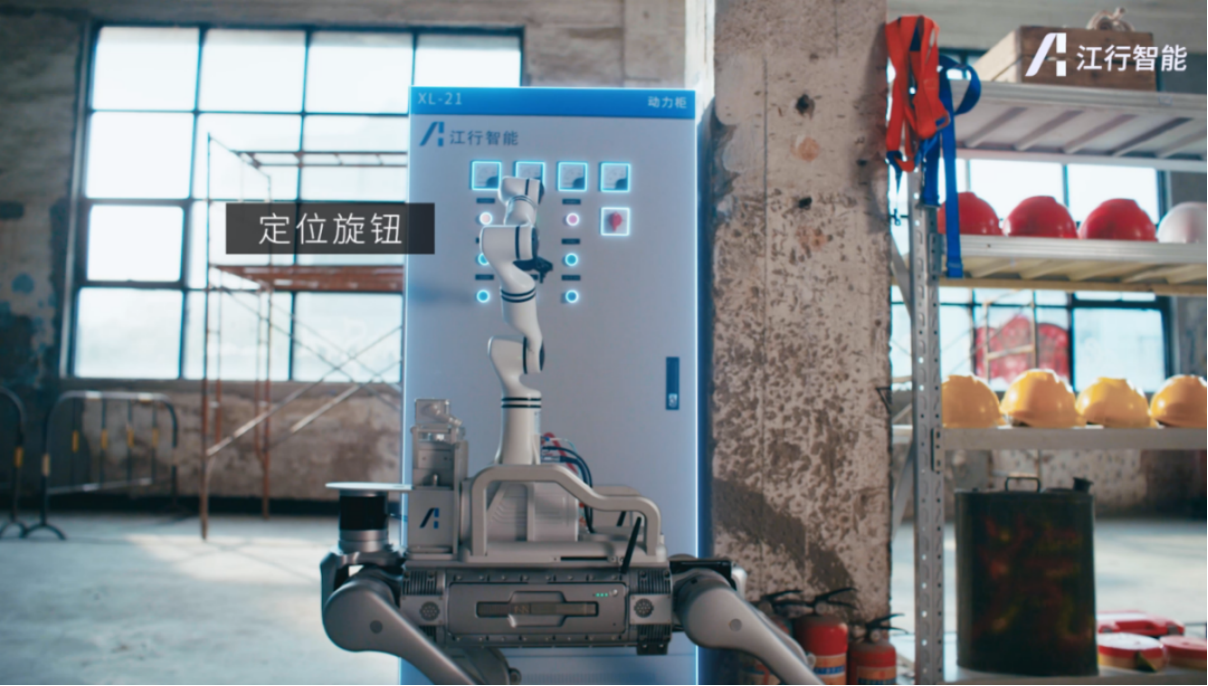
Turning a knob looks simpler than driving. Yet for a robot, applying the right force is an order of magnitude harder than walking up to the knob—because force control requires real-time response to the external physical world, not pre-written programs. That is why many robots can walk, see, and avoid obstacles, but very few can actually get their hands on a job and do it.
Why Not Install a “Cloud Brain”?
Large models are powerful. Why not connect the robot to the cloud and let AI think for it? In theory, possible. In practice, there is a fatal problem: networks disconnect, and latency is unavoidable.
In industrial sites—substations, chemical parks, underground utility tunnels—the network is far more complex than in an office. Signals are unstable, bandwidth is limited, and latency is uncontrollable. If every action waits for cloud thinking and a response, a network jitter can leave the robot frozen in place as an expensive sculpture.
More importantly, many industrial operations have a golden window. When equipment malfunctions, judgment and action must happen within seconds. There is no time for a network round trip.
A robot that can truly work must have its brain in its body: on-device deployment, with all computation performed locally.
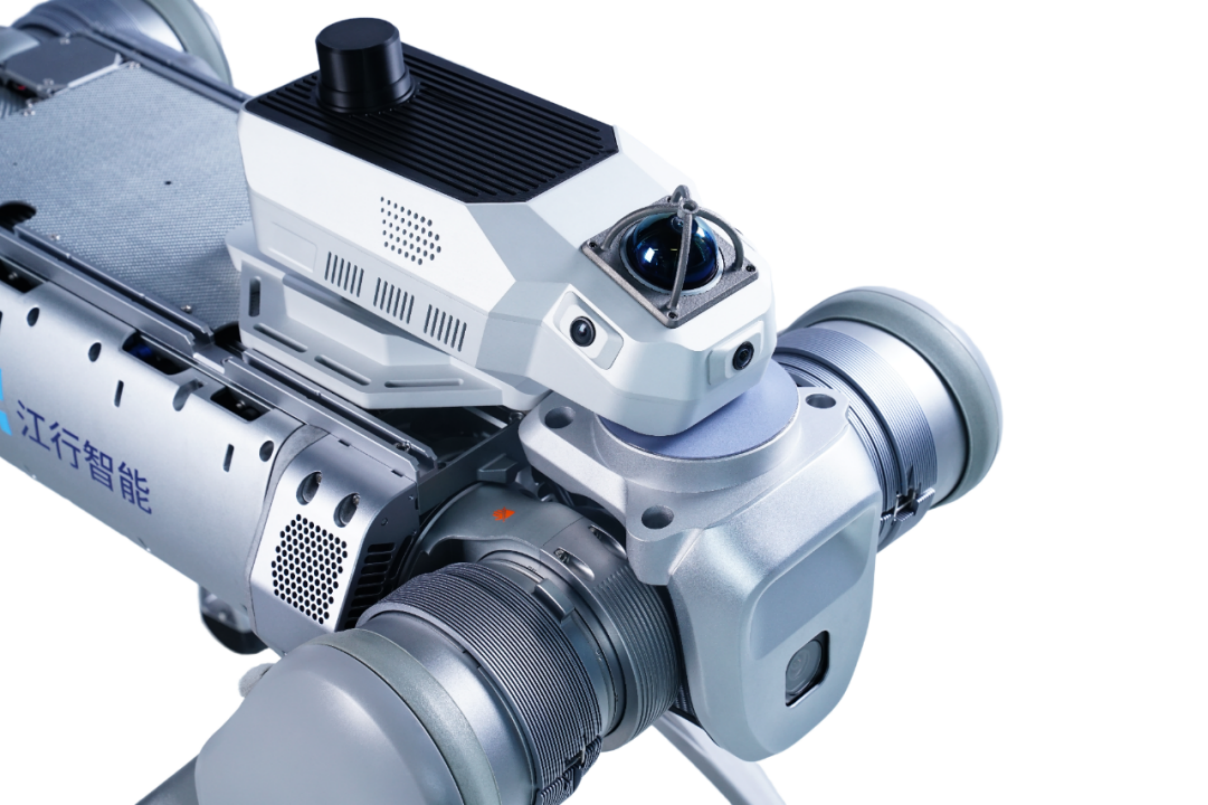
It is like handling an emergency on site: you cannot call someone to ask what to do; you must judge and act yourself. This simple truth is the fundamental difference between Physical AI and ordinary networked devices.
How Does a Robot Take a “Hands-On Class”?
Consider a concrete example. Jiangxing Intelligence’s embodied robot, Qingxun X1U, is equipped with a robotic arm.
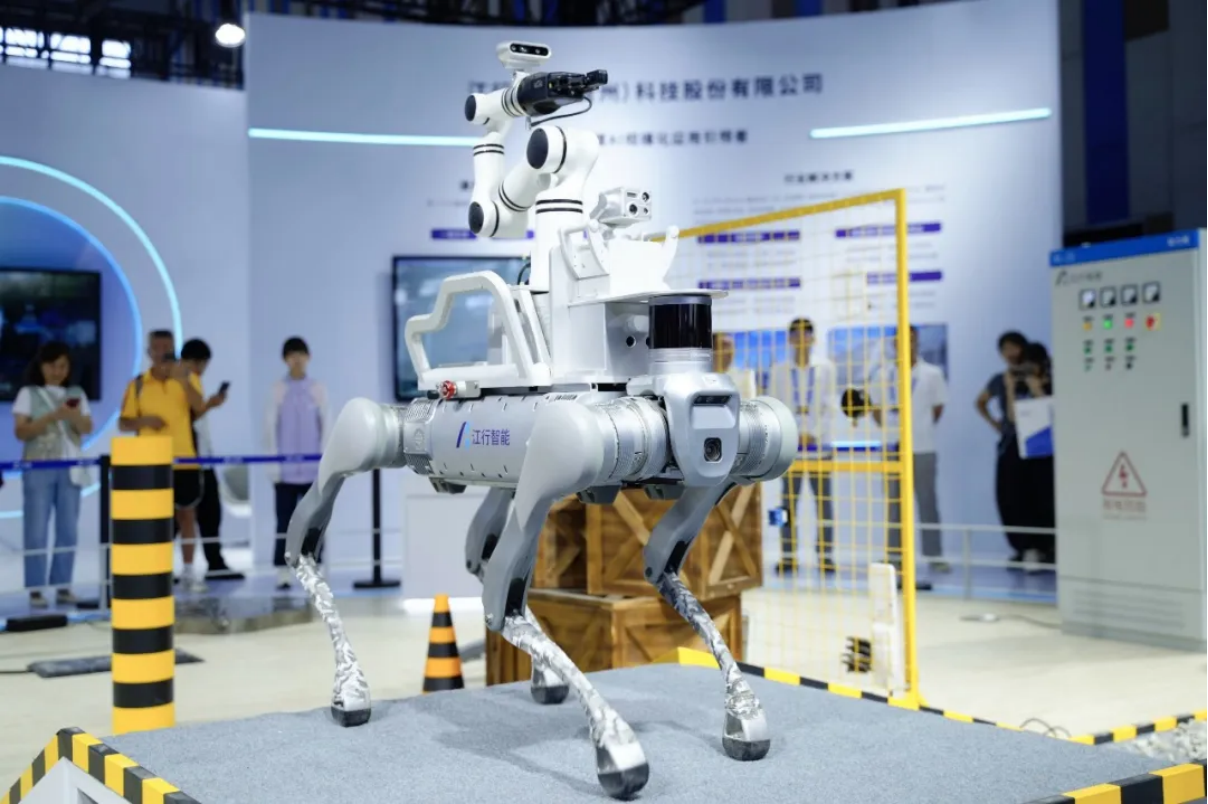
In an actual operation, it approaches a power cabinet to perform a knob reset. The process is:
1. The vision system locates the knob and confirms that it needs resetting.
2. The robotic arm plans a path, avoids the cabinet edge, and aligns with the knob.
3. It applies appropriate force to rotate the knob—not too light, or it will slip; not too heavy, or it will damage the equipment.
4. It steps back and verifies that the knob has actually been reset.
This mirrors a human tightening a screw: aim, grasp, align, apply force, tighten, and verify. Behind each step, computation runs. Force control is especially critical: the robot must “feel” resistance changes upon contact and adjust torque in real time. This requires not recognition, but physical understanding.
Another easily overlooked example: while moving, Qingxun X1U encounters a puddle. It does not wade through; it pauses and goes around. This is not simply “detect an obstacle and avoid it.” It combines terrain, water depth, its own load, and the task objective to judge that direct passage may be risky and detouring is safer.
Seeing an obstacle is perception; understanding risk and making a decision is intelligence. The gap between them is the line between automated equipment and Physical AI.
In Closing
Back to the opening question: Why can the AI in your phone recognize a faucet but not turn it on? Because it has recognition, but not understanding, and certainly not manipulation. When a robot assembles the four pieces—perception, understanding, decision-making, and execution—it can avoid puddles, tighten knobs, and complete a full physical operation among equipment. It becomes a participant rather than an observer. A robot learning to work is essentially no different from a person learning to work: in the real world, through repeated practice and continuous evolution. That is exactly what Physical AI is doing.