

The Hidden Foundation of Physical AI: How Thousands of Real-World Sites Drive the Continuous Evolution of JX-Phi Brain
After the product launch, many customers have raised questions about AgileRanger C1U and TitanRanger X1U, covering computing power, positioning accuracy, mapping‑capable area, robotic arm payload and other specifications. While these metrics are undoubtedly important, there is a more thought‑provoking question worth exploring:
After a quadruped robot completes its first inspection mission at a substation, will it perform better on its second run?
The answer is yes. It will improve with every subsequent mission.
This improvement does not stem from factory‑released firmware updates. Instead, it is the outcome of continuous evolution delivered by JX‑Phi Brain in real‑world industrial sites. This capability is powered by a data‑driven closed‑loop system operating around‑the‑clock across thousands of station sites.
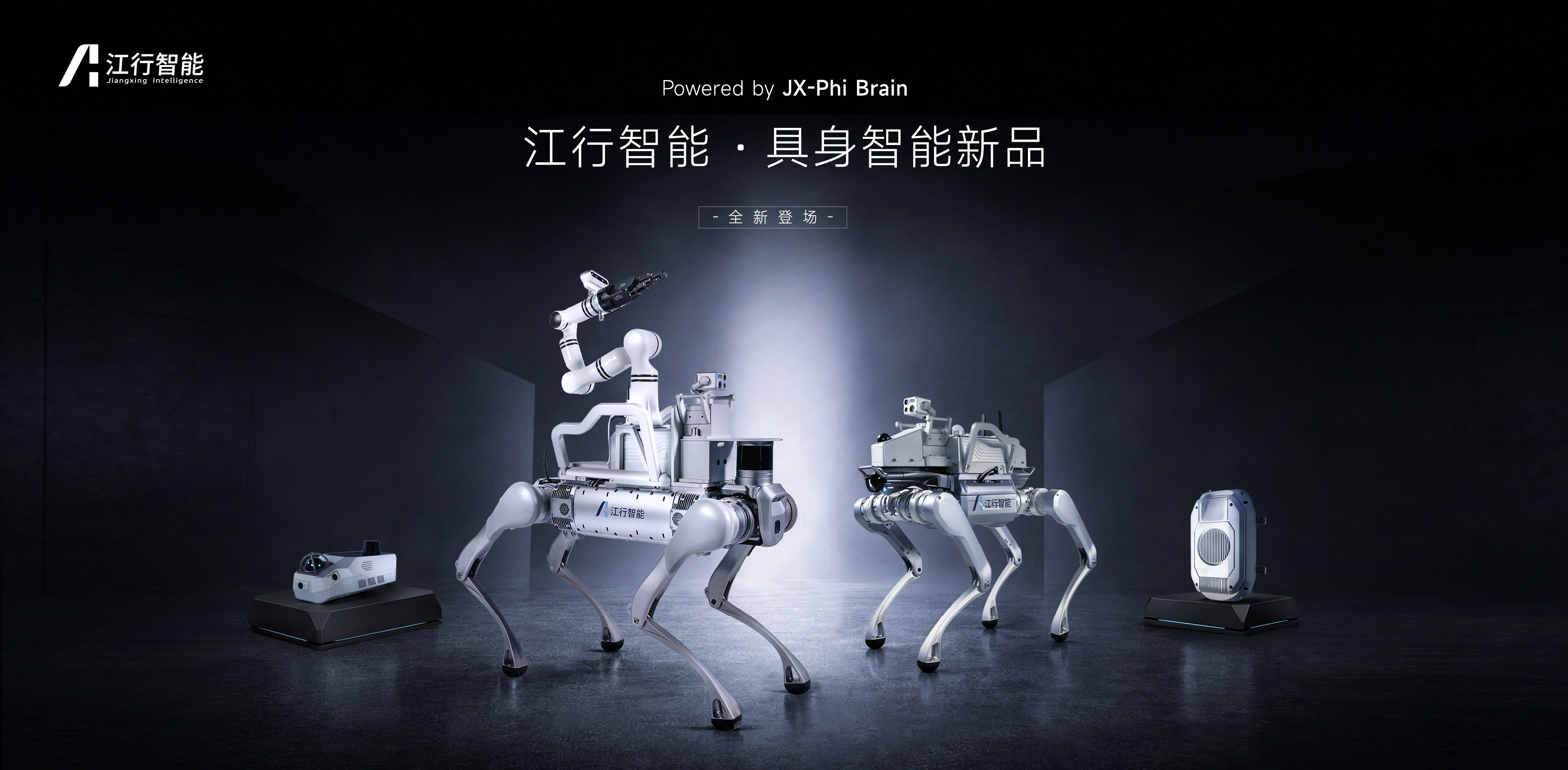
Jiangxing Intelligence · New Embodied‑Intelligence Product Release
The "Learning" of Physical AI Is Fundamentally Different From Internet‑Based AI
Large language models learn from internet corpus — identifying linguistic patterns from massive volumes of text data. A new GPT version requires tens of thousands of GPU cards running for months for a single training cycle. Once deployed, the model remains static until the next official release.
Physical AI, however, operates in an entirely different environment:
- Physical‑driven space: Each substation features unique equipment layouts, lighting conditions and device models. Even switchgears of the same model may be installed at angles differing by up to 15 degrees across provinces.
- Continuous‑flow time: Equipment ages, meter readings fade, and vegetation grows. A model trained in last summer may suffer reduced recognition accuracy this spring due to shifted sunlight angles.
- Long‑tail anomalies: Equipment failures are low‑probability events with extremely diverse forms. A model trained on 20 known defect types may encounter the 21st unknown fault during on‑site operation.
This means physical AI cannot follow the "train‑once, deploy‑forever" paradigm. It must keep learning after deployment, with every learning cycle built upon real‑world field data.
Model iteration for internet‑based AI follows a factory‑mode workflow: retrain offline and redeploy updated versions. Model iteration for physical AI adopts a field‑mode workflow: learn while operating and grow more capable with use.
Trinity Framework: The Engineering Logic Behind Jiangxing’s Data Foundation
The evolutionary capability of JX‑Phi Brain rests upon a trinity‑structured data foundation: Industrial Field Recording — Edge‑Device Validation — Virtual Simulation Deduction.
Layer 1: Industrial Field Recording — Generate Authentic Data On‑Site
This forms the most fundamental and scarce layer. While inspection robots carry out daily missions across over 1,000 station sites, they generate multi‑modal data, including equipment imagery, infrared thermography, point clouds, acoustic fingerprint signals, meter readings, anomaly logs and operation records.
The core value of this dataset lies in its authenticity. Unlike staged lab‑captured data, these records reflect real‑time equipment conditions, variable lighting and on‑site weather. An infrared thermal image of a high‑voltage bushing captured at −20 °C in a substation can never be reproduced by simulation systems.
More importantly, the dataset contains large quantities of negative samples: equipment faults, abnormal operating states and the progressive evolution of defects. Such samples are extremely rare in industrial scenarios yet constitute critical fuel for model iteration.
Layer 2: Edge‑Device Validation — Verify Performance Within Live Deployment Environments
Once model training is finished, validation must be conducted on physical edge‑side robots.
Jiangxing has built a shadow‑run verification mechanism: the new model and legacy model run in parallel on the same robot. Inference outputs from the new model are cross‑checked against those of the stable legacy version. The new model is officially rolled‑out only after results fall within acceptable deviation thresholds and receive human confirmation.
This workflow safeguards iteration safety, eliminating the risk of deploying untested models to industrial sites and discovering defects post‑launch.
Layer 3: Virtual Simulation Deduction — Generate "Unseen‑in‑Reality" Scenarios via World Models
Valuable as real‑world data is, it has an inherent limitation: failures rarely occur, and many extreme working conditions may surface only once a year or less.
Jiangxing’s AutoWorld world‑generation engine creates simulated high‑risk operating conditions, rare fault cases and failure‑recovery paths. For instance, it can virtually replicate a scenario where two equipment faults occur simultaneously under extreme high temperatures, allowing the model to get "exposed" to these edge‑case events in advance.
Virtual simulation does not replace real‑world data. Instead, it supplements long‑tail rare‑event samples missing from field datasets, preventing model breakdown when extreme conditions emerge.
Two Core Metrics of the Data Flywheel: Efficiency & Scale
Though this closed‑loop framework appears straightforward, two key indicators determine whether the self‑reinforcing flywheel can operate sustainably.
1. Data‑collection Efficiency
Under traditional workflows, engineers manually sift high‑value samples — records capturing anomalies, defects or rare scenarios — from massive inspection datasets. This process is labour‑intensive and prone to missed cases.
Powered by the AutoEdge edge‑cloud collaboration engine, Jiangxing has implemented Geo‑Hint automatic detection and golden‑sample filtering. The system autonomously identifies high‑value training samples, boosting effective data‑collection efficiency by approximately 2‑3 times.
2. Model‑iteration Cycle
The full‑cycle duration spanning data acquisition, model refresh and edge‑side rollout defines the evolution speed of physical AI.
At present, Jiangxing has shortened the closed‑loop update cycle for a standard station site to a weekly timeline: from data ingestion and incremental adaptation, lightweight model refresh to gradual grey‑scale validation. Capability upgrades for a substation are no longer large‑scale, cumbersome projects.
As more sites join the network, iteration cycles keep shrinking: the broader the range of scenarios the model has encountered, the less adaptation work is required for new environments.
A Thousand Sites Are Not the Destination — But the Starting Point of the Data Flywheel
A frequently‑raised question: what are the core scaling hurdles when expanding from 1,000 sites to 10,000?
Algorithm adaptation is not the primary bottleneck. The real challenge lies in whether the data flywheel can be automatically connected for every newly‑added station.
If each new site requires manual data labelling, training and deployment, scaling costs will rise exponentially.
Jiangxing’s solution is pre‑adaptation. Drawing on its experience across one thousand stations, the company has accumulated model baselines covering multiple voltage levels, equipment manufacturers and climate zones. Newly‑deployed stations can quickly locate the closest‑matching baseline model from the repository and complete rapid fine‑tuning.
Crucially, every new site enhances the generalisation capability of the whole system. New‑site‑generated data on unfamiliar equipment, environments and anomalies flows into the shared data foundation. After training, these improvements are fed back to all deployed stations across the network.
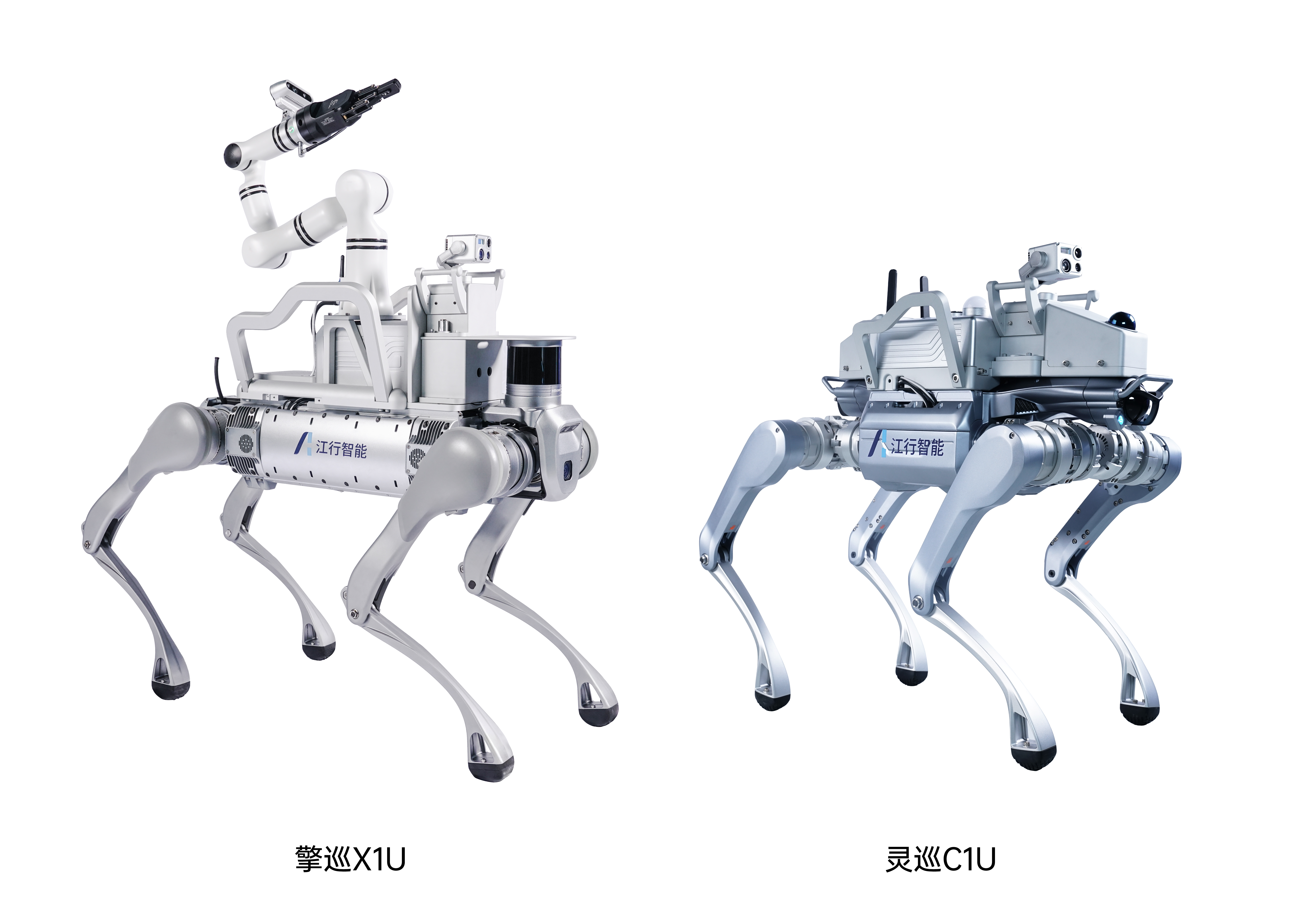
Time: The Deepest Moat for Physical‑AI Technology
An interesting trend exists within the physical‑AI industry: algorithms can be replicated, research papers reproduced, but a multi‑year, continuously‑optimised closed‑loop system validated on thousands of industrial sites cannot be quickly matched by competitors.
Building such a data flywheel takes time, deep domain knowledge of industrial scenarios, and customer trust to deploy robots on‑site. None of these outcomes can be rapidly achieved through capital investment or short‑term technical development.
Jiangxing Intelligence has spent eight years perfecting this closed‑loop system. Since entering the power‑industry market in 2018, the company has built a full‑stack self‑developed physical‑AI technology system and launched its embodied‑intelligence product portfolio in 2026. There are no shortcuts along this journey.
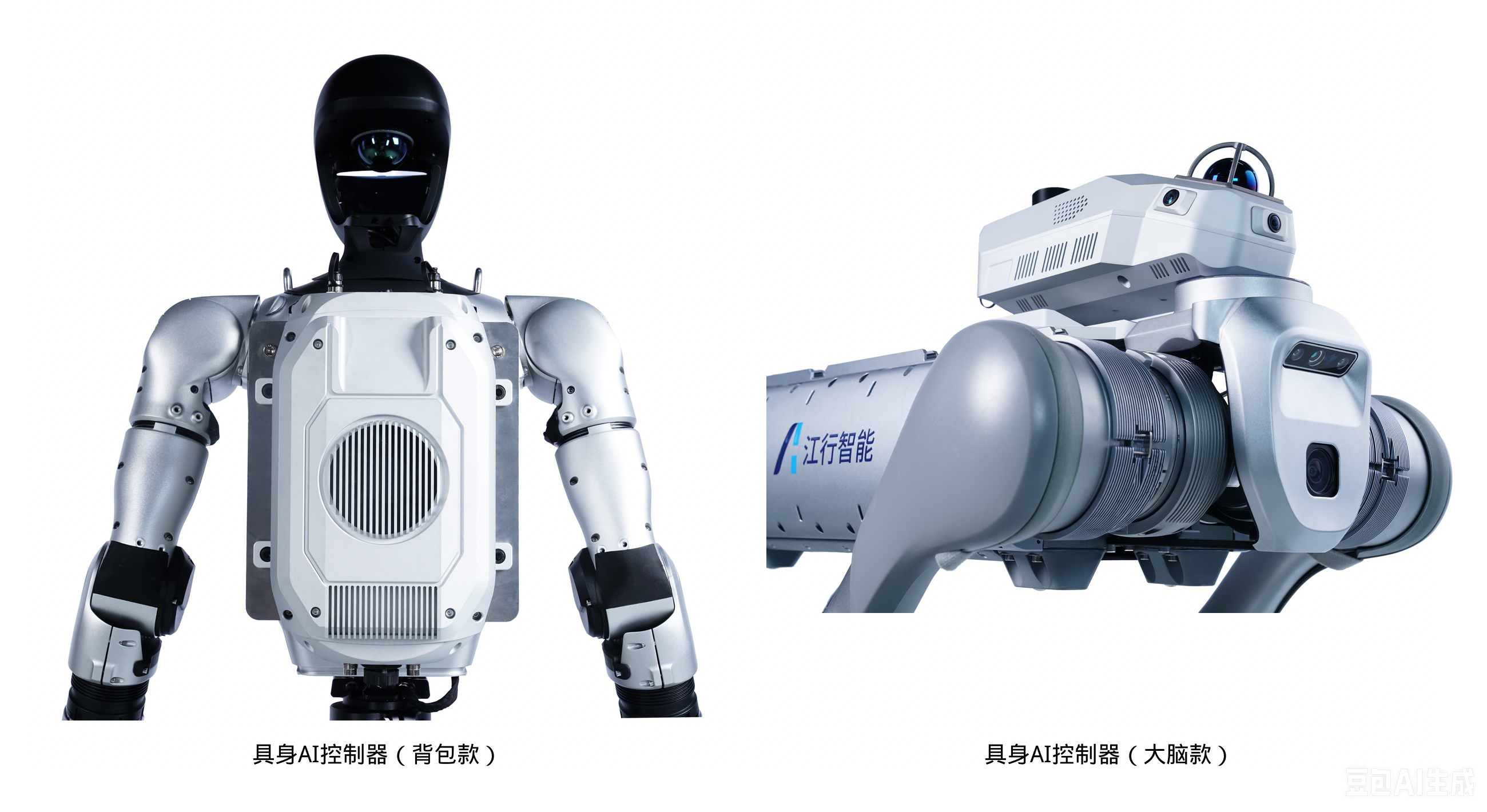
This explains why we state: JX‑Phi Brain was not merely trained in a laboratory. It was forged on‑site across thousands of industrial installations.