

Recognition of Outstanding Strength: Jiangxing Intelligence’s Tingzikou Project Selected as a Typical Case of AI Plus Energy & Power by China Electricity Council
On July 26, the 2026 “7·26 Power Theme Day” event, organized by the China Electricity Council (CEC), was held in Hangzhou. During the event, CEC officially released its list of representative “AI+” energy and power application cases. The AI-based mobile and fixed terminal collaborative inspection system for Sichuan Tingzikou Hydropower Station was successfully selected.
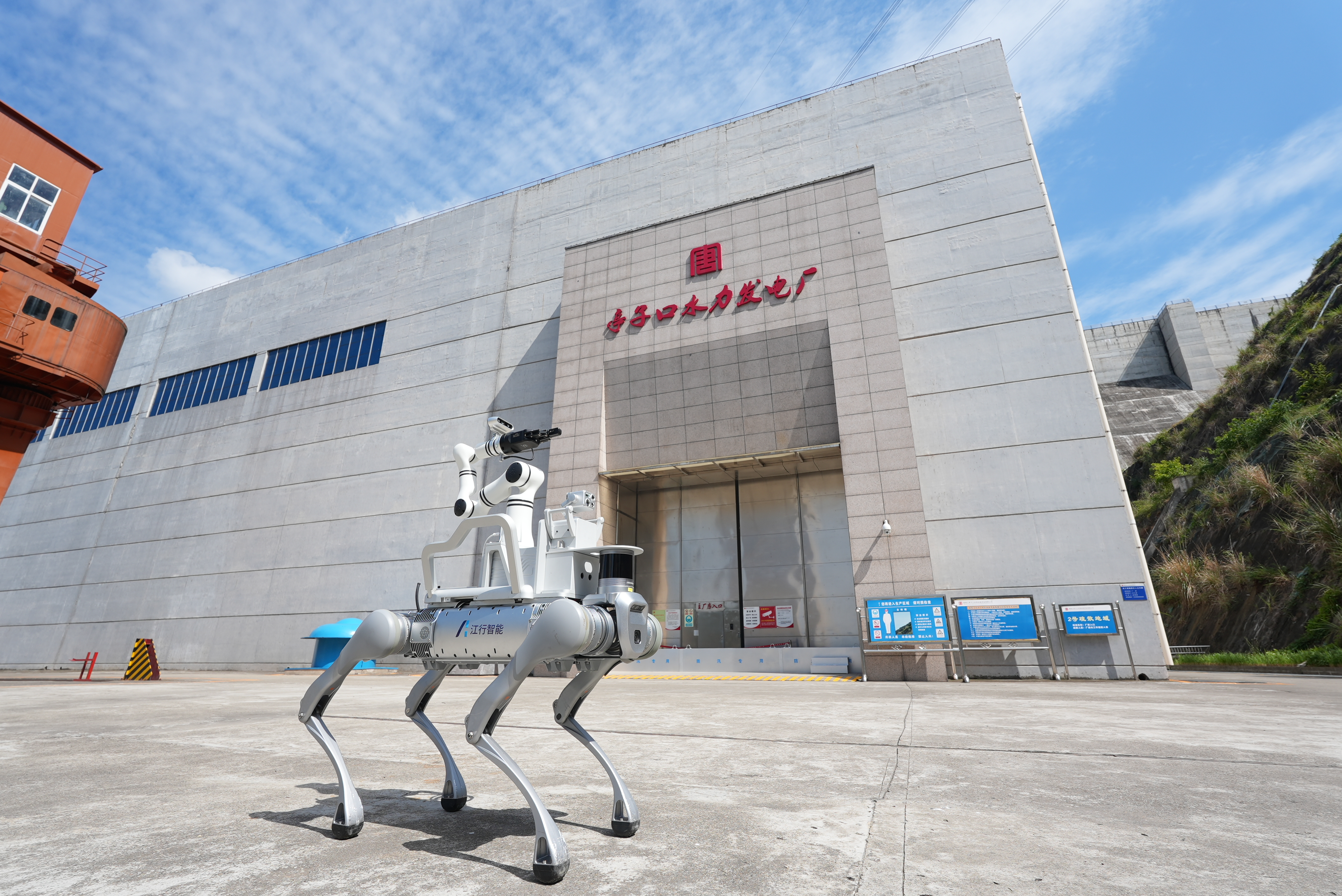
Powered by the JX-Phi Physical AI technology system, quadruped robots perform intelligent inspection tasks at Tingzikou Hydropower Station
Project Background: Operational and Maintenance Challenges of Hydropower Facilities
Tingzikou Water Conservancy Hub is a key energy infrastructure project in northeastern Sichuan and a major controlling project along the main stream of the Jialing River. It integrates multiple functions, including power generation, flood control, irrigation, and water supply. Its safe and stable operation is critical to regional energy security and public services.
Traditional manual inspection methods face significant challenges, including insufficient inspection frequency, limited coverage of high-risk areas, constraints in equipment condition monitoring, delayed identification of potential hazards, and difficulties in data traceability.
On-site inspections of high-voltage electrical equipment and oil-water-gas systems involve considerable safety risks. Manual operations in these environments have become increasingly insufficient to meet the requirements of smart power plant development and modern operation and maintenance management.
Implementation Approach: A Collaborative Inspection System Powered by 5G + Robots + AI
Leveraging the full-site 5G private network coverage at Tingzikou Hydropower Station, the project partnered with JX Intelligence to develop a collaborative intelligent inspection system based on 5G industrial robots and AI-powered image recognition technologies.
The system covers two key operational scenarios: the 378-meter elevation generator floor and the dam-top gate control room. It integrates equipment inspection, equipment status recognition, infrared temperature measurement, leakage detection, and precise remote gate operation into a unified intelligent workflow.
The project followed a comprehensive implementation pathway:
theoretical research → technical development → laboratory validation → engineering deployment → on-site pilot operation → performance evaluation → technology promotion
The implementation included six major phases: project preparation and theoretical research, core technology development and module engineering, equipment deployment, system integration and scenario-based testing, official commissioning and effectiveness evaluation, as well as result consolidation and application expansion.
Three Major Technological Breakthroughs
1. Advanced Adaptation and Communication Technologies for 5G Industrial Robots in Complex Environments
To address challenging hydropower operating conditions, including high temperature, low temperature, high humidity, electromagnetic interference, and stair navigation, the project optimized the protection capabilities and mobility performance of quadruped robots.
Based on the power station’s N38/N41 frequency-band 5G private network, the system achieved deep network adaptation with end-to-end latency below 20 ms.
Combined with physical AI-powered spatial intelligence, the robots achieved less than 5 cm repeated positioning accuracy, enabling reliable autonomous navigation, obstacle avoidance, fall prevention, and stable path planning.
2. Full-Scenario AI Image Recognition and Intelligent Diagnosis Technology for Hydropower Operations
The project developed a fusion algorithm combining visible-light imaging and infrared thermal imaging technologies.
Key capabilities include:
- Temperature measurement accuracy: ±2°C
- Meter recognition accuracy: ≥99%
- Switch status recognition accuracy: ≥99.5%
- Leakage detection accuracy: ≥90%
The solution enables lightweight deployment on edge-side devices, supporting real-time intelligent diagnosis in complex industrial environments.
3. Precision Control Technology Based on 5G Industrial Robots with Multi-Functional Force-Controlled Operation Units
The robotic arm supports:
- Payloads exceeding 3 kg
- Repeated positioning accuracy of 0.1 mm
Powered by physical AI-based embodied operation capabilities, the system can accurately perform a wide range of operational tasks, including:
- Switch opening and closing
- Rotary knob adjustment
- Circuit breaker operations
- Intelligent gate opening adjustment
achieving end-to-end autonomous operation processes.
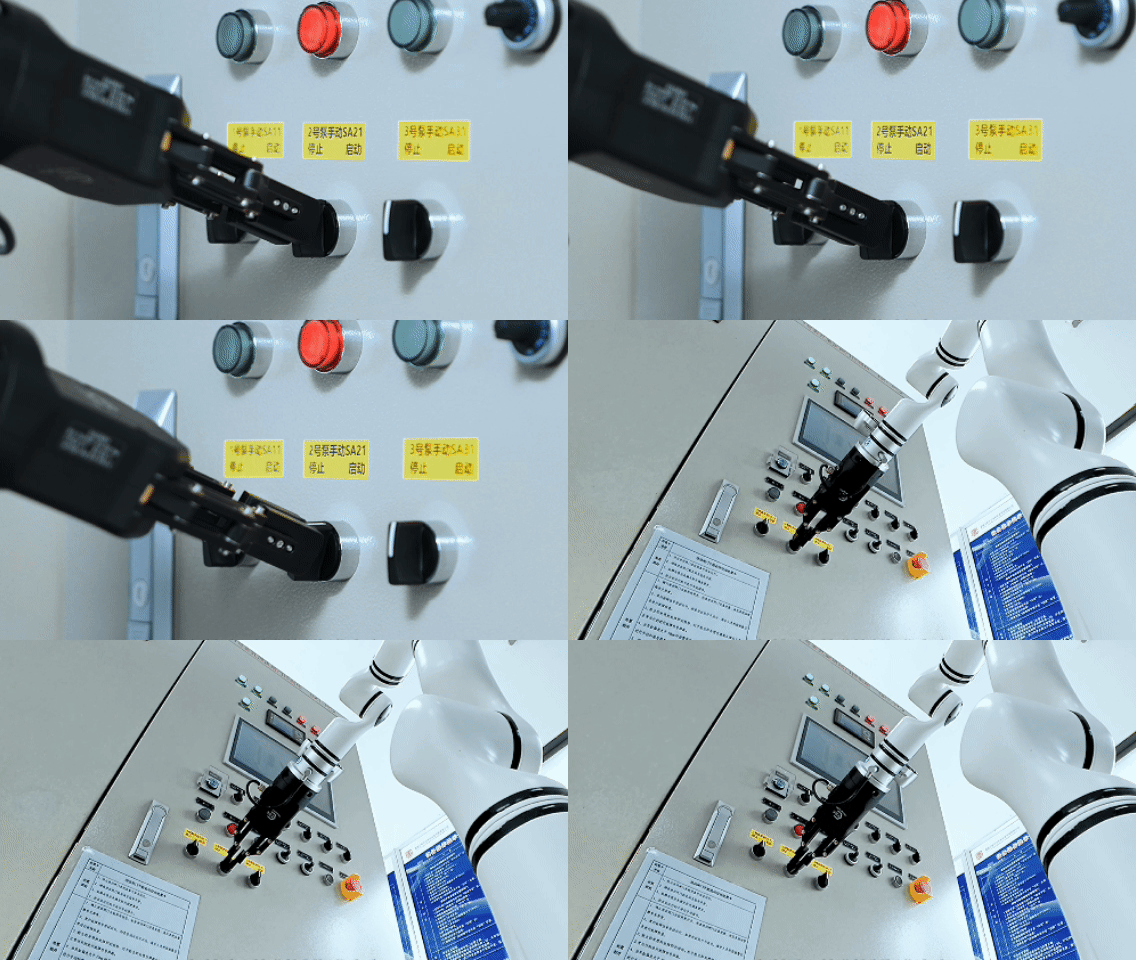
JX-Phi Brain enables robotic arms to perform control panel button operations
Significant Application Results
The project uses quadruped robots to replace manual operations for 24/7 continuous inspection and remote gate control operations in critical areas.
The deployment has achieved:
- Reduction of approximately 800 manual inspection tasks annually
- 90% reduction in on-site operational safety risks
- Improvement of equipment hazard identification timeliness and response efficiency to 95%
The system fully complies with domestic information technology innovation requirements and seamlessly integrates with the station’s big data platform, forming a replicable smart operation and maintenance technology framework.
It provides a benchmark example for the intelligent transformation of the hydropower industry.
Industry Impact and Replication Value
The project represents a pioneering application of 5G + quadruped robots + AI image recognition + remote robotic arm operation in large-scale hydropower facilities.
Through deployment in complex hydropower environments, the project has developed comprehensive technical solutions and practical experience in:
- Robot adaptation for complex industrial scenarios
- High-precision autonomous navigation
- AI-based visual diagnosis
- Adaptation to domestic IT infrastructure platforms
- Security Zone IV system integration
With high maturity and broad applicability, the solution can be directly replicated across various large, medium, and small hydropower stations and water conservancy facilities.
It can also be expanded to other complex inspection and operation scenarios, including substations, thermal power plants, and renewable energy sites, demonstrating significant market potential and industrial value.
Currently, JX Intelligence’s physical AI solutions have been deployed across 27 provinces, municipalities, and autonomous regions in China, covering key industries including power grids, renewable energy, hydropower, thermal power, oil & gas, chemicals, and rail transportation.
The successful selection of the Tingzikou project as a representative “AI+” energy and power application case demonstrates industry-wide recognition of JX Intelligence’s achievements in smart hydropower transformation.